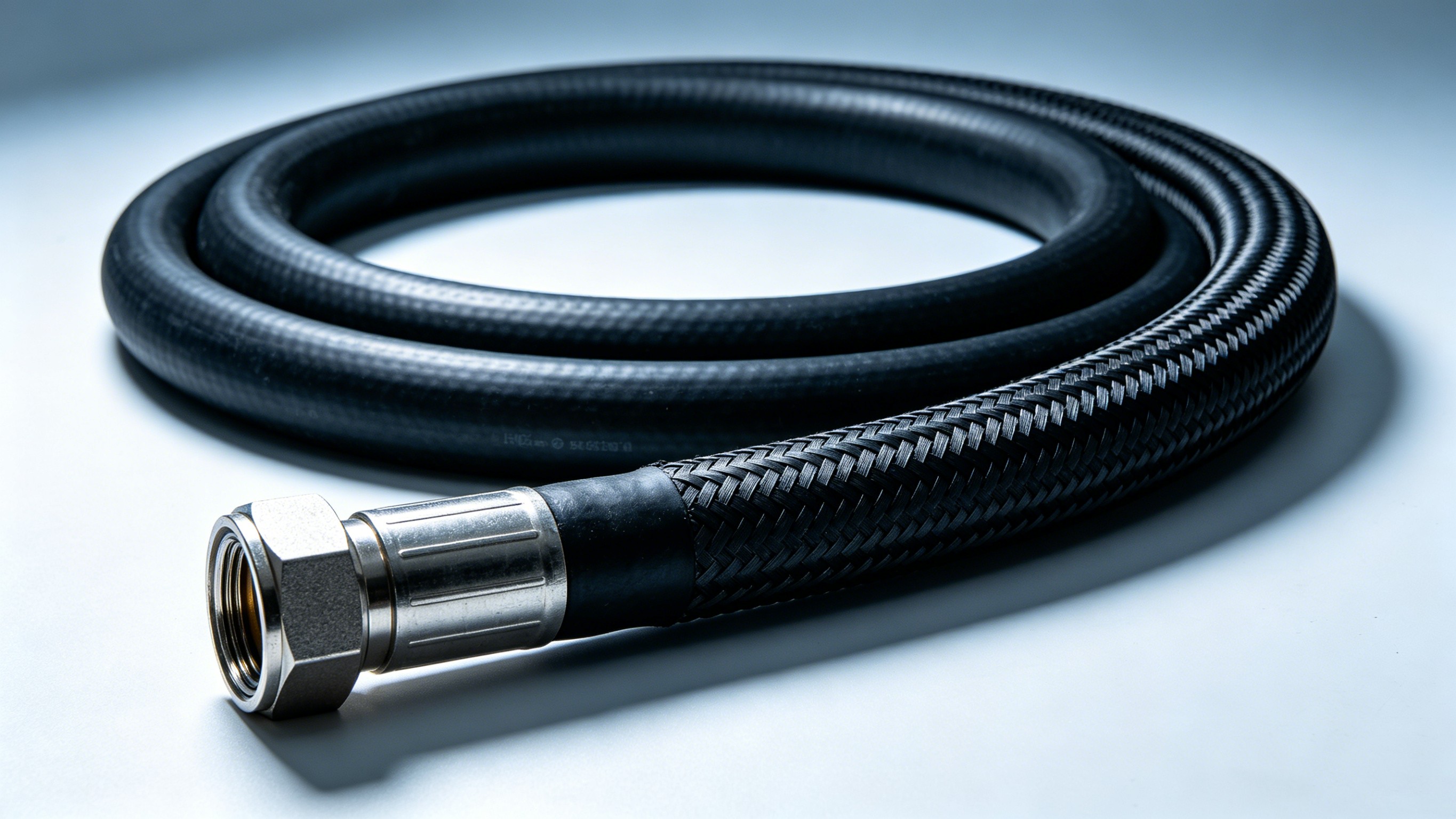
ylon Resin vs. PU Polyurethane vs. TPV Rubber Hoses: Which One Is Right for Your Application?
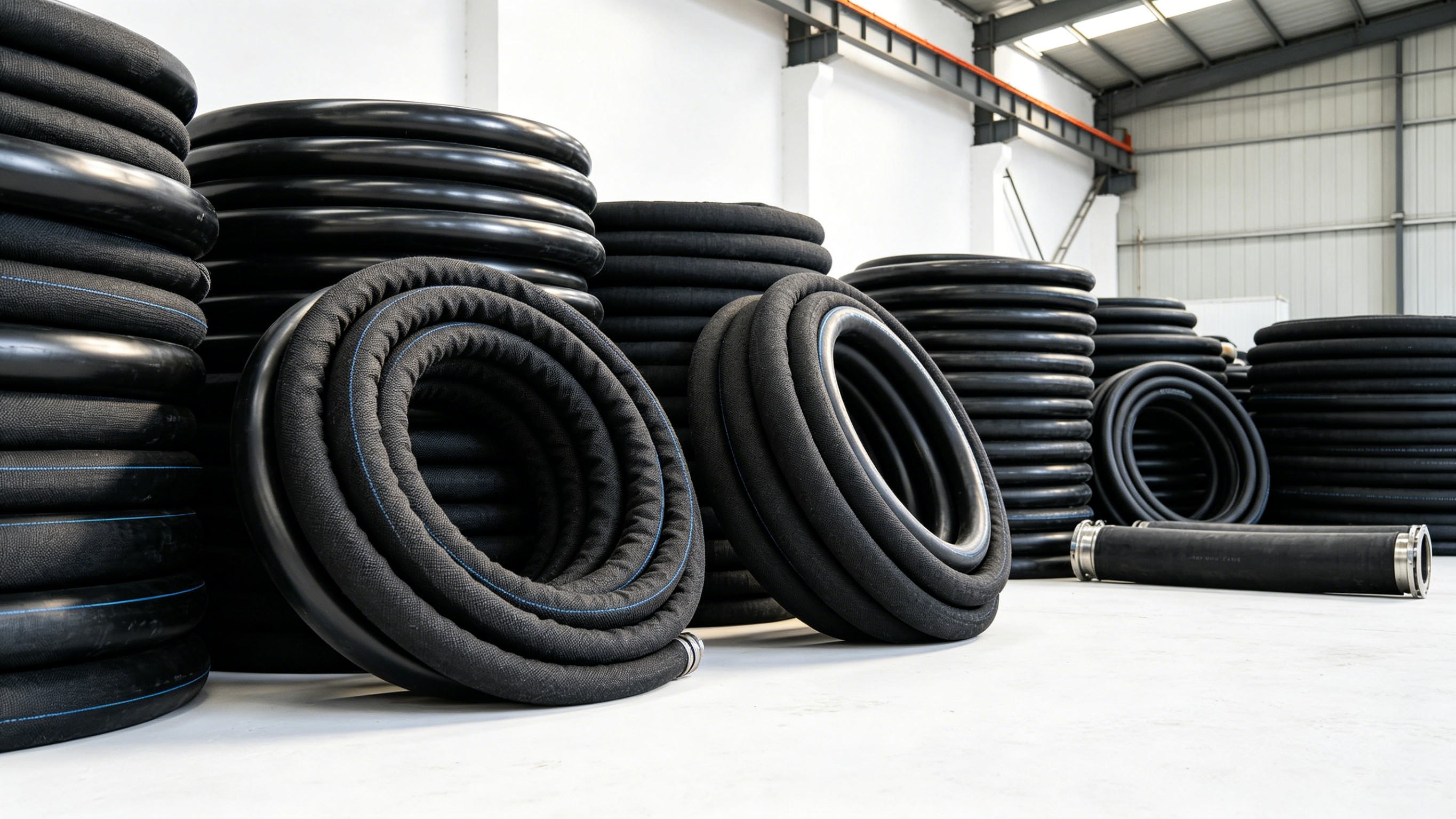
When engineers and procurement teams search for industrial hoses, one question comes up again and again: which material is best? Nylon resin, PU polyurethane, and TPV rubber are three of the most common choices—and each has distinct strengths, limitations, and ideal applications.
Choosing the wrong material can lead to leaks, bursts, premature wear, or even safety incidents. This article compares these three hose families across key performance factors so you can select with confidence.
1. Material Overview
Nylon Resin Hoses
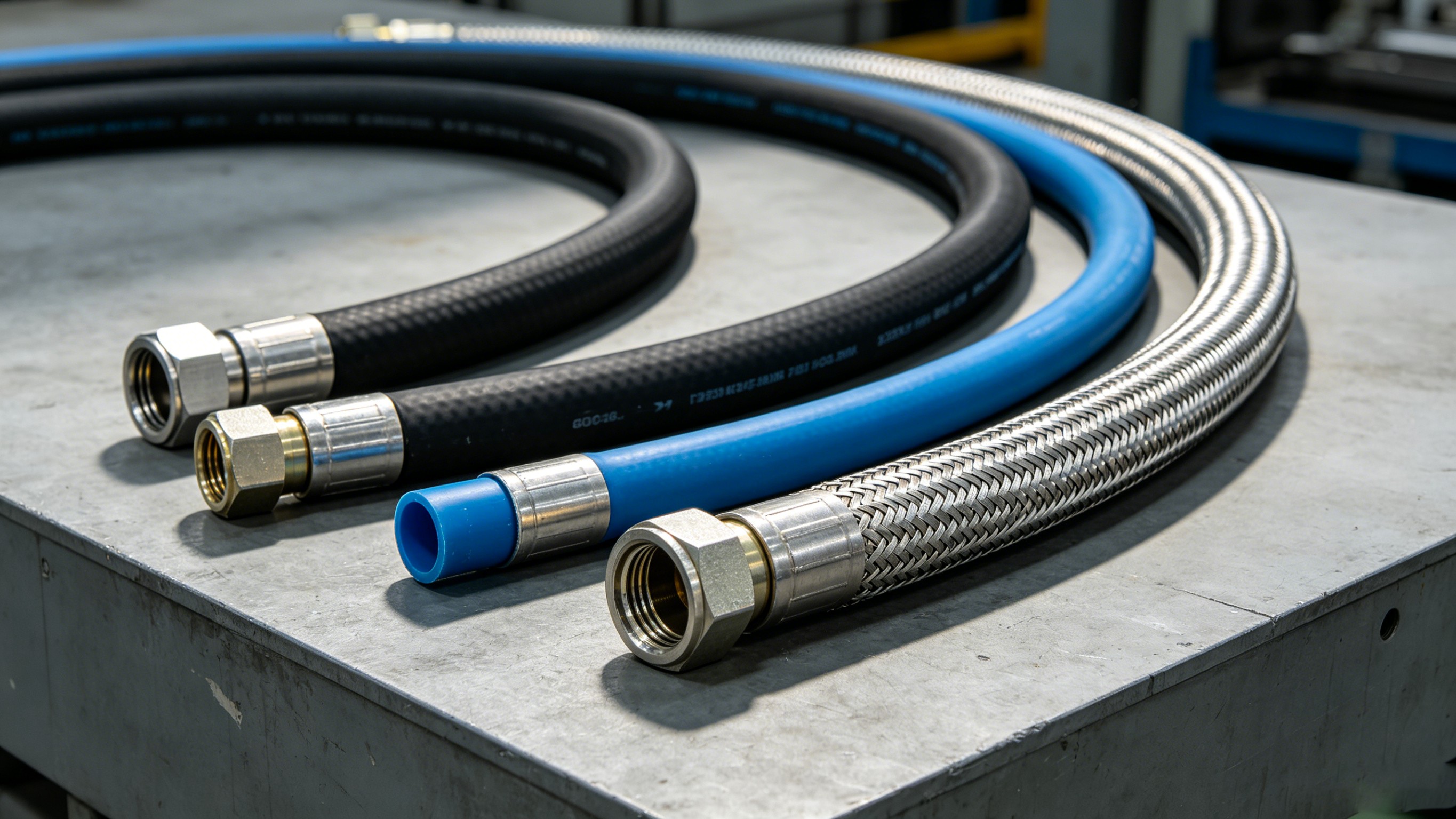
Nylon resin is a high-strength engineering polymer known for excellent pressure resistance, chemical stability, and low volumetric expansion. It is the go-to material for hydraulic lines and precision pressure testing.
PU Polyurethane Hoses
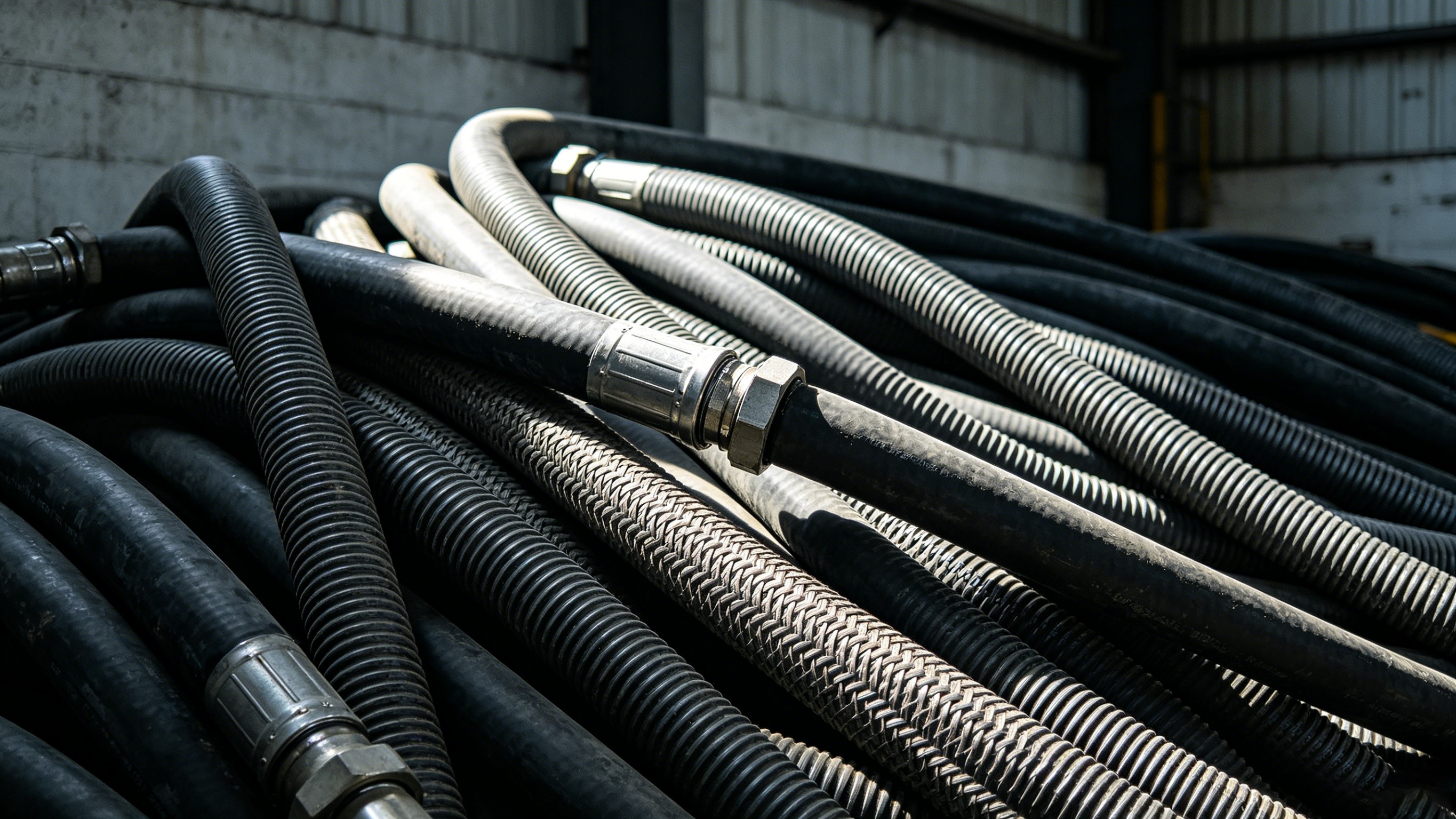
Polyurethane offers outstanding abrasion resistance, flexibility, and resistance to oils and greases. When reinforced with steel wire or formed into ribbed structures, PU hoses handle high pressures and demanding pneumatic applications.
TPV Rubber Hoses
TPV (thermoplastic vulcanizate) combines the elasticity of rubber with the processability of thermoplastics. It delivers excellent weather resistance, UV stability, and long service life in outdoor and automotive environments.
2. Pressure Performance
Material Typical Pressure Capability Best For
Nylon Resin High to very high Hydraulics, pressure testing
PU Polyurethane Medium to high (higher with steel wire) Pneumatics, industrial automation
TPV Rubber Medium Automotive, HVAC, general industrial
Nylon resin generally wins in pure pressure capability, especially in small-diameter high-pressure lines. PU with steel wire reinforcement closes the gap for larger-diameter applications.
3. Flexibility and Bend Radius
Nylon resin: Semi-rigid; excellent for fixed routing but less forgiving in tight bends.
PU polyurethane: Highly flexible, even at low temperatures; ideal for moving equipment.
TPV rubber: Flexible and elastic; good for vibration-prone installations.
If your system involves motion, vibration, or tight spaces, PU and TPV hoses are usually the better choice.
4. Abrasion and Chemical Resistance
PU polyurethane offers the best abrasion resistance of the three—often outlasting rubber by several times in abrasive environments.
Nylon resin provides excellent resistance to oils, fuels, and many solvents.
TPV rubber delivers good general chemical resistance plus superior UV and ozone resistance.
For dusty, gritty, or high-wear conditions, PU is the clear winner.
*5. Temperature Range*
Nylon resin: Good performance across a wide range, though extreme cold can reduce flexibility.
PU polyurethane: Performs well in cold environments; limited at very high temperatures.
TPV rubber: Stable across a broad range with excellent weathering performance.
Always confirm the specific temperature rating of the hose you select, as formulations vary.
6. Typical Applications
Nylon Resin High-Pressure Hose
Hydraulic systems
Fuel and oil lines
Industrial fluid transfer
Nylon Resin Pressure Test Hose
Pressure vessel testing
Pipeline integrity checks
Laboratory and field testing
PU Polyurethane Steel Wire Hose
Pneumatic tools
Automation systems
High-pressure air and gas lines
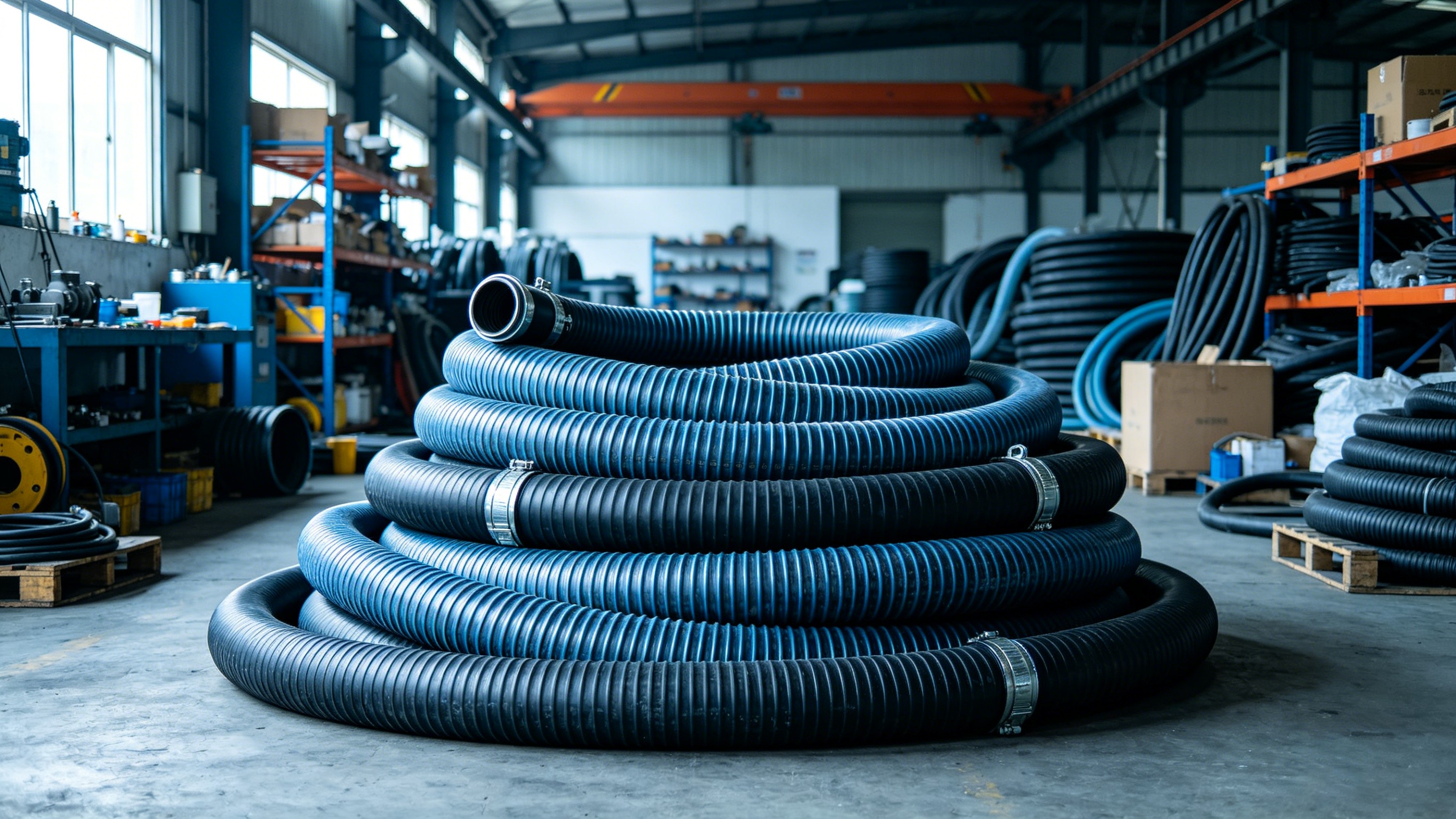
PU Polyurethane Ribbed Hose
Dust extraction
Ventilation
Pneumatic conveying
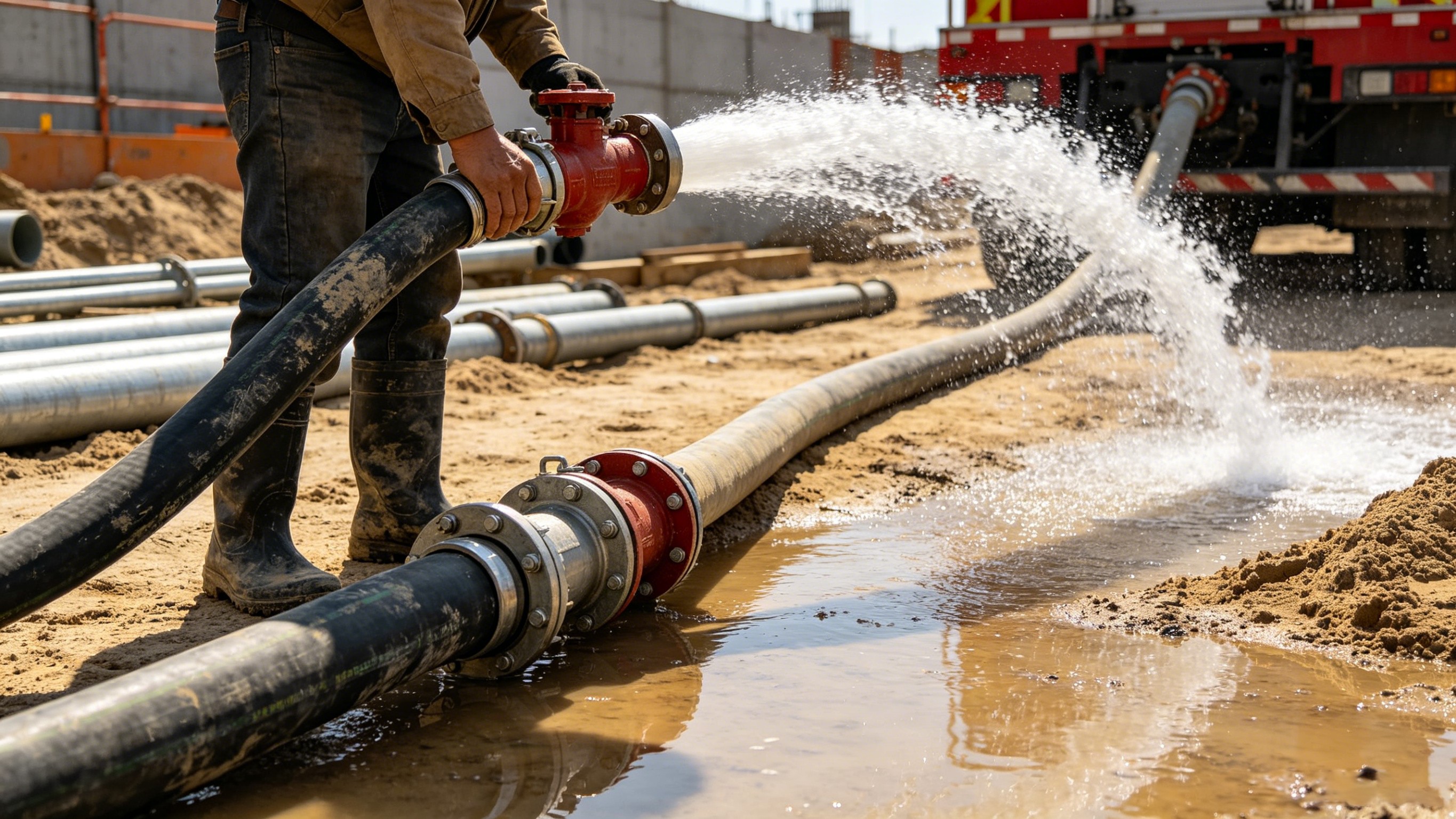
Ultra-High-Pressure Cleaning Hose
Industrial cleaning
Surface preparation
Hydro-demolition
TPV Rubber Hose
Automotive cooling and heating
HVAC systems
Outdoor and weather-exposed applications
7. Cost and Lifespan Considerations
The cheapest hose is rarely the most cost-effective. Consider total cost of ownership:
Nylon resin hoses offer long life in high-pressure static applications.
PU polyurethane hoses reduce replacement frequency in abrasive environments.
TPV rubber hoses provide dependable longevity in outdoor and vibration-heavy use.
Matching the material to the application minimizes downtime and replacement costs.
8. Quick Selection Guide
Need maximum pressure capability? → Nylon resin
Need maximum abrasion resistance and flexibility? → PU polyurethane
Need weather resistance and rubber-like elasticity? → TPV rubber
Need ultra-high-pressure cleaning performance? → Specialized ultra-high-pressure cleaning hose
Conclusion
There is no single "best" hose—only the best hose for your specific application. By understanding the differences between nylon resin, PU polyurethane, and TPV rubber, you can improve safety, extend service life, and reduce operating costs.
As a manufacturer of nylon resin high-pressure hoses, nylon resin pressure test hoses, PU polyurethane steel wire hoses, PU polyurethane ribbed hoses, ultra-high-pressure cleaning hoses, and TPV rubber hoses, we help customers worldwide find the right solution. Contact us for technical advice, samples, or a customized quote.