How to Choose Nylon Resin High-Pressure Hoses and Pressure-Test Hoses: Key Selection Points Explained
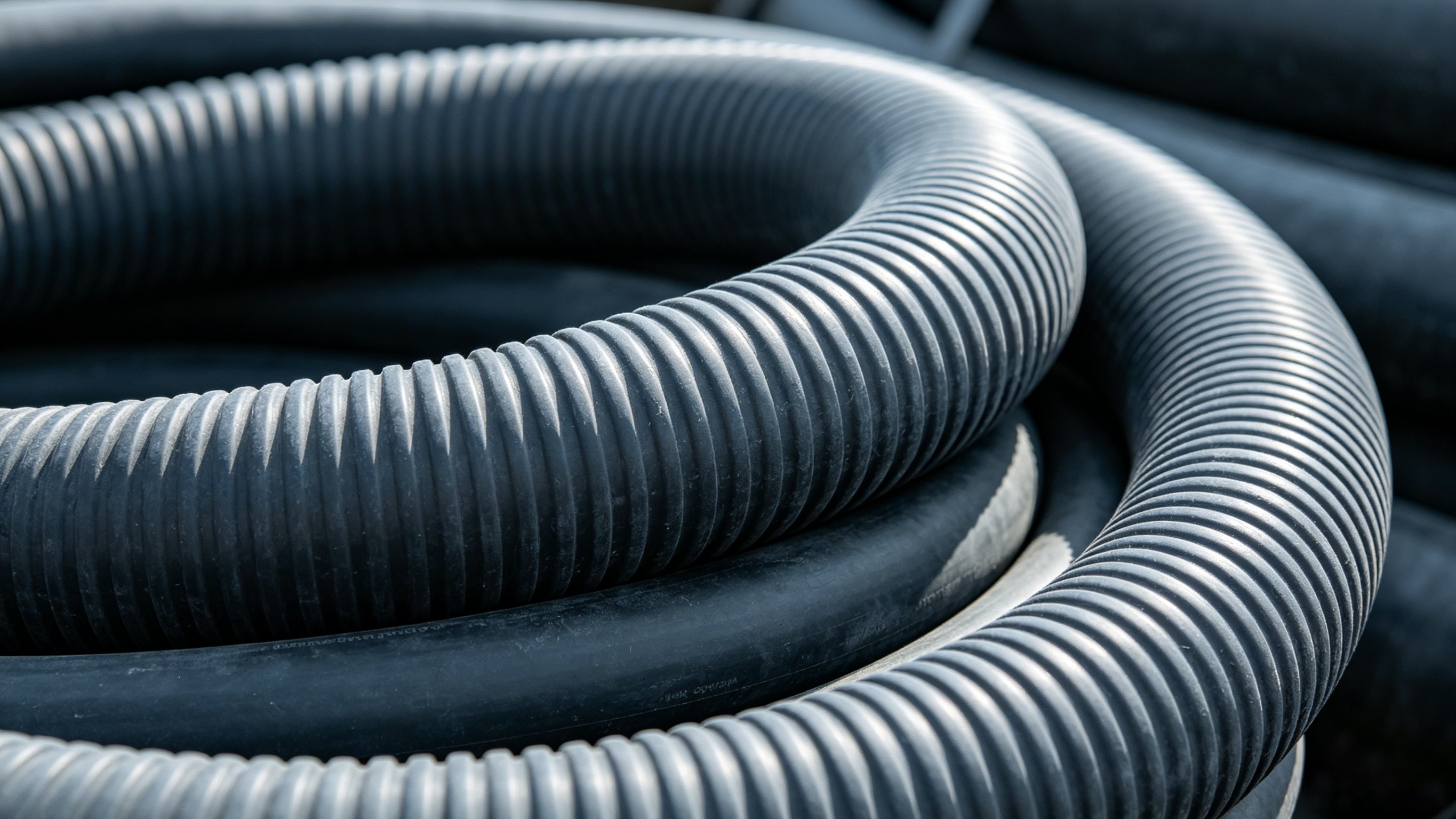
In hydraulic systems, construction machinery, machine tools, and various high-pressure testing applications, nylon resin high-pressure hoses and nylon resin pressure-test hoses are among the most widely used tubing products. They are lightweight, high-pressure resistant, resistant to oil and chemical corrosion, and have a small bending radius, making them ideal for routing in compact equipment. However, many buyers and engineers focus only on "how much pressure it can handle" during selection, while ignoring factors such as temperature, media, fittings, and pulsating conditions. This often leads to premature hose failure, and even leakage or burst risks.
As a hose manufacturer, we recommend evaluating the following dimensions comprehensively.
1. First Distinguish the Application: High-Pressure Transmission or Pressure Testing
Nylon resin high-pressure hoses are mainly used for high-pressure fluid transmission, such as hydraulic oil, water, emulsion, and gas. They must withstand relatively high working pressure for long periods and provide good resistance to pulsating fatigue. Nylon resin pressure-test hoses, on the other hand, are more often used to connect pressure gauges and pressure sensors to pipelines. They usually have smaller diameters and emphasize stable pressure transmission, fast response, high pressure safety factors, small outer diameter, and good flexibility for bending near instruments.
Although both belong to the nylon resin hose family, their applications differ, and so do their selection priorities. Pressure-test hoses focus more on inner diameter consistency and pressure transmission accuracy, while high-pressure hoses focus more on pressure rating and long-term durability.
2. Pressure Rating: Distinguish Working Pressure from Burst Pressure
The first step in selection is to confirm the system's working pressure, peak pressure, and pulse frequency. The hose's rated working pressure should be higher than the system's continuous working pressure, with a reasonable safety margin. For applications with pressure surges or frequent pulses, choose products with a higher safety factor. Burst pressure is usually several times the working pressure, but you cannot simply use burst pressure to infer working pressure, because long-term pulsating fatigue is the main cause of hose failure.
3. Working Temperature: The Applicable Range of Nylon Resin
Nylon resin hoses generally work within a wide temperature range, but different grades and formulations vary considerably. For normal-temperature hydraulic systems, standard nylon hoses are suitable. If the ambient temperature is high, or the media itself carries heat, confirm the hose's pressure derating at that temperature. In low-temperature environments, pay attention to flexibility to avoid hardening, cracking, or breaking during bending.
4. Media Compatibility: Oil, Water, Gas, and Chemical Liquids
Nylon resin offers good resistance to hydraulic oil, lubricating oil, water, and some chemical solvents, but it is not suitable for all media. For example, strong acids, strong alkalis, and certain ketone and ester solvents may cause swelling or degradation of nylon. Before selection, confirm the media type, concentration, and temperature, and conduct immersion tests if necessary. When used for gas media, pay special attention to safety protection, because compressed gas stores a large amount of energy, and the risk of burst is higher.
5. Fittings and Connection Methods: The Key to Leak-Free Performance
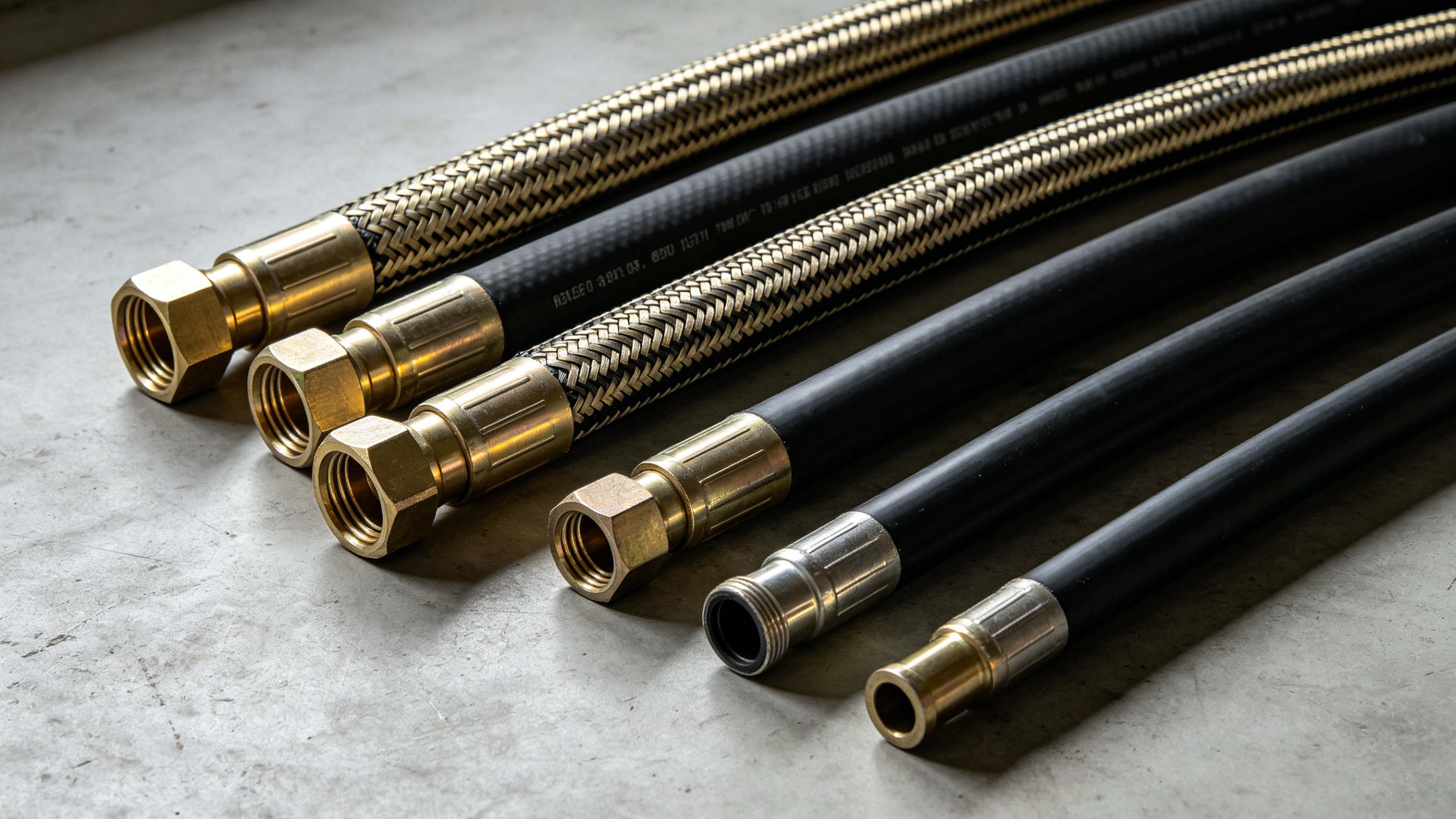
Many hose failures are not caused by rupture of the hose body, but by leakage or detachment at the fitting. Common connection methods for nylon resin high-pressure hoses and pressure-test hoses include ferrule fittings, quick-connect fittings, threaded fittings, and welded fittings. During selection, confirm the fitting material, sealing method, thread specification, and whether it matches the equipment interface. For pressure-test hoses, also ensure the fitting inner diameter is not too small, otherwise pressure transmission speed may be affected.
6 Bending Radius and Installation Space
Nylon resin hoses are flexible, but they still have a minimum bending radius requirement. If the installation space is narrow, forcing a small-radius bend will cause localized stress concentration in the hose body, leading to cracking over time. It is recommended to route the hose according to the manufacturer's minimum bending radius and use clamps or brackets to secure it, avoiding vibration and friction.
7. Typical Application Scenarios
Nylon resin high-pressure hoses are widely used in construction machinery hydraulic systems, machine tool lubrication systems, high-pressure cleaning equipment, and pneumatic control systems. Nylon resin pressure-test hoses are commonly used for pressure gauge connections, hydraulic test benches, online monitoring systems, and laboratory pressure testing devices. Different scenarios have different requirements for hoses, so selection should be based on actual working conditions, not just price.
8. Summary of Selection Recommendations
Clarify the application: transmission or pressure testing.
Confirm working pressure, peak pressure, and pulse frequency.
Confirm media type, concentration, and temperature.
Confirm ambient temperature and installation space.
Choose matching fittings and sealing methods.
Keep a reasonable safety margin; do not use beyond the pressure rating.
Regularly inspect the hose appearance, fittings, and aging condition.