Common Industrial Hose Failures: Troubleshooting Guide & Tips for Extending Service Life
Industrial hoses serve as the "blood vessels" that connect equipment and convey media. Their operating condition directly impacts the safety and efficiency of the entire system. However, over extended periods of use, hoses inevitably face various failure issues. Understanding the symptoms and root causes of common failures, and mastering scientific troubleshooting methods and maintenance techniques, is essential for ensuring production safety and reducing operating costs.
I. Six Common Failures and How to Troubleshoot Them
1. Leakage
Leakage is one of the most common industrial hose failures, typically manifesting as fluid or gas seepage at fittings or along the hose body, resulting in unstable system pressure.
Common causes: Aging or damage to fitting seals; gradual material degradation from prolonged exposure to high temperatures, high pressures, or corrosive media; improper fitting installation — overtightening can damage the sealing surface, while undertightening leads to seal failure.
Troubleshooting: First, inspect the fitting seals for aging, deformation, or damage, and replace them with new seals if necessary. Verify that the fitting tightening torque meets specifications. Check the hose body for cracks, bulges, or corrosion-induced perforations. If the hose body itself is damaged, replace the entire hose rather than attempting a simple repair.
**
2. Burst
**
A burst is the most severe hose failure, often causing sudden shutdowns or even safety incidents.
Common causes: The actual system pressure exceeds the hose's rated working pressure, or the hose operates continuously near its pressure limit; fatigue damage from high-frequency vibration or cyclic pressure loading, particularly at weld seams and fitting transition zones; material mismatch during selection — for example, using standard-grade hoses in high-temperature, high-pressure environments.
Troubleshooting: Verify that the system's maximum working pressure falls within the hose's rated pressure range, and maintain an adequate safety margin. For hoses operating in high-pressure fluctuation environments, regularly inspect the hose body for fatigue cracks. Confirm that the hose material is compatible with the actual operating temperature, medium, and pressure.
**
3.Abrasion
Continuous friction between the hose outer surface and surrounding equipment, piping, or other hoses leads to outer cover damage. In severe cases, the wire reinforcement layer becomes exposed, ultimately causing leaks or bursts.
Common causes: Improper routing that allows direct contact between the hose and other components; frequent hose movement or displacement during equipment operation; abrasive particles such as sand or dust present in the working environment.
Troubleshooting: Inspect the hose routing for signs of contact or friction marks, paying special attention to bends and anchor points. Check whether the outer cover is thinned, damaged, or has exposed wire reinforcement. If abrasion is severe, replace the hose promptly and consider adding an abrasion-resistant sleeve or rerouting the hose.
4. Corrosion
In chemical, marine, mining, and similar environments, hoses are susceptible to attack from chemical media or humid air, leading to wall thinning or even perforation.
Common causes: The conveyed medium contains corrosive components such as acids, alkalis, or salts; the external environment is humid or contains corrosive gases; the hose outer cover lacks adequate corrosion resistance.
Troubleshooting: Regularly inspect the hose surface for rust, discoloration, blistering, or other signs of corrosion, with particular attention to fitting and weld areas. In corrosive environments, prioritize hoses made from corrosion-resistant materials and consider adding protective sleeves for extra protection.
5. Vibration Fatigue
Continuous vibration during equipment operation subjects the hose to repeated cyclic stress, causing material fatigue that ultimately leads to cracking or rupture.
Common causes: The hose is installed too tightly without sufficient bending allowance; the equipment vibration frequency is close to the hose's natural frequency, causing resonance; insufficient support or anchoring allows excessive hose movement during operation.
Troubleshooting: Check whether the hose exhibits abnormal vibration or excessive oscillation amplitude. Confirm that a reasonable bending radius and slack allowance were maintained during installation. In high-vibration environments, consider installing vibration dampers or anti-vibration brackets to reduce the impact on the hose.
*
6.*Twisting and Deformation
If a hose is twisted during installation, the reinforcement layers experience uneven stress distribution, drastically shortening service life. According to industry data, as little as 5° of installation twist can reduce hose life by approximately 70%, while 7° of twist may shorten it by up to 90%.
Common causes: Forcibly twisting the hose during installation to route around obstacles; relative motion of connected components during equipment operation causing momentary torsion on the hose.
Troubleshooting: Inspect the hose for spiral-shaped deformation marks. Confirm that the hose sits in a natural, untwisted state after installation with no residual torsional stress. If twisting is found, reroute the hose and use elbow adapters to change direction rather than twisting the hose itself.
II. Practical Tips for Extending Service Life
1. Proper Selection Is the Foundation
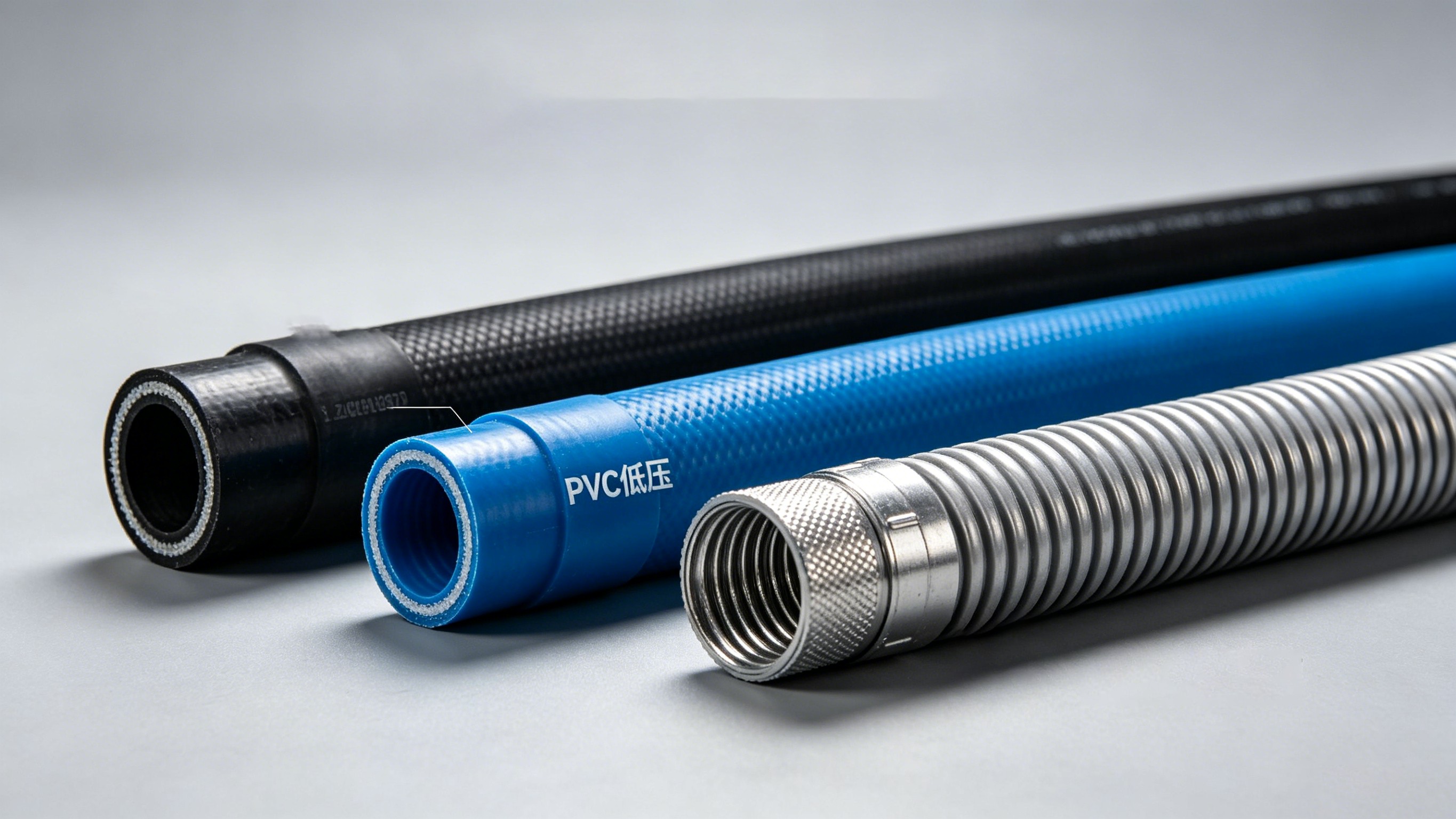
When selecting a hose, refer to the industry-standard "STAMPED" principle, evaluating seven dimensions: Size, Temperature, Application, Material (of conveyed medium), Pressure, Ends (fittings), and Delivery method — to ensure the hose is a complete match for your operating conditions.
2. Correct Installation Is the Key
Follow these key points during installation:
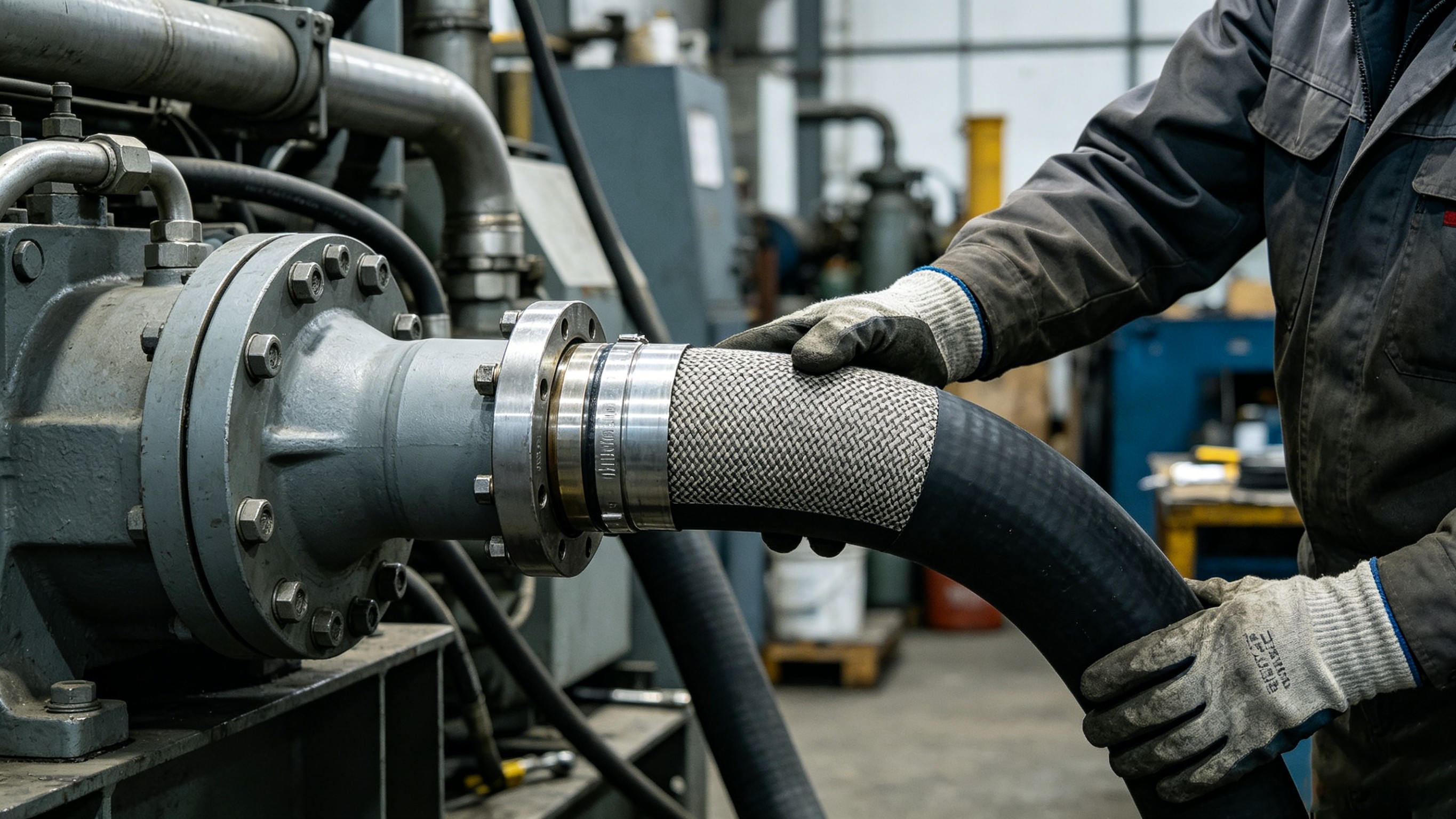
Ensure the bending radius is no smaller than the hose's specified minimum bending radius; avoid sharp bends or kinks
Avoid twisting the hose during installation; ensure it sits in a natural, stress-free state
Route the hose so it bends in only one plane; if compound bends are unavoidable, use intermediate anchor points
Fitting connections should be secure but not overtightened
The hose should not contact moving parts to prevent friction and wear
**
3 Routine Inspection Is Essential
Establish a pre-use visual inspection routine, focusing on:
Whether the outer cover shows cracks, bulges, discoloration, hardening, or softening
Whether fittings are loose, corroded, or leaking
Whether the hose is twisted, over-bent, or compressed
Whether the reinforcement layer shows signs of exposure
Whether the hose routing is合理 and free from contact with surrounding objects
**
4.Use Protective Accessories Wisely
Depending on your operating conditions, consider adding protective accessories:
Abrasion sleeves: Ideal for scenarios where the hose rubs against other components
Spring guards: Installed near fittings to prevent excessive bending at the connection point
Nylon sleeves: Protect against UV exposure and external abrasion
Anti-vibration brackets: Reduce fatigue damage caused by vibration
5. Proper Storage and Scheduled Replacement
After use, drain, rinse, and air-dry the hose before coiling it for storage in a cool, dry place. Avoid sharp bends and folding.
Regarding replacement intervals, based on 2026 industry reference data, rubber and resin high-pressure hoses are generally recommended for replacement every 2 to 3 years or after 5,000 cumulative operating hours under normal conditions; steel wire-reinforced high-pressure hoses can extend to 5 years or 10,000 hours. In harsh conditions involving high temperatures, pressure fluctuations, or abrasive particle exposure, the replacement interval should be shortened by 30% to 50%. If the hose shows surface cracks, bulges, hardening, fitting leaks, or a pressure test drop exceeding 15%, it should be replaced immediately.
Conclusion
Troubleshooting and service life management of industrial hoses is a systematic undertaking. From proper selection and correct installation to routine maintenance and scheduled replacement, no step should be overlooked. Getting these fundamentals right not only extends hose service life and reduces replacement costs — more importantly, it safeguards operator safety and ensures stable equipment operation. If you encounter any issues during hose use, please feel free to contact our technical team. We are ready to provide professional fault diagnosis and product solutions.